

Within a rapidly globalized economy, businesses are continuously looking for creative solutions to enhance their operational efficiency and competitiveness. A notable option is the idea of FTWZs, which serve as key hubs for international trade, logistics, and warehousing. https://notes.io/es6LF provide a unique combination of compliance advantages, fiscal incentives, and logistical improvements that can significantly impact a business's bottom line. Whether you are an importer, export business, or an e-commerce business, understanding how to navigate the challenges of Free Trade Warehousing Zones is essential for maximizing your logistics chain and growing your market reach.
Our guide intends to illuminate the details of FTWZs, covering their main characteristics, compliance obligations, and the numerous benefits they provide. From fiscal benefits to improved supply chain efficiency, we will delve into how these zones can function as a driving force for growth in today’s competitive landscape. Additionally, we will outline practical steps for setting up a business within these zones and share case studies of successful enterprises that have leveraged these benefits to thrive in global markets.
Benefits and Advantages of Free Trade Warehousing Zones
Free Trade Warehousing Zones give companies with significant financial savings, notably in terms of fees and levies. By permitting firms to retain goods minus the immediate need to settle these costs, businesses can better manage their cash flow and allocate resources more effectively. special economic zone enables companies to invest in growth opportunities while minimizing operating costs, making it an appealing alternative for both new and established businesses.
One more key advantage of Free Trade Warehousing Zones is the better distribution solutions they offer. These zones are optimally placed, often near large transportation hubs, which facilitates more rapid and efficient movement of goods. This geographical advantage not only optimizes supply networks but also improves general responsiveness to market conditions, guaranteeing that companies can satisfy customer needs quickly and effectively.
In addition, Free Trade Warehousing Zones contribute to greater market entry for businesses. By functioning within these zones, companies can capitalize on global trade possibilities and grow their international presence. This factor is particularly advantageous for digital firms looking to tap into new markets. The option to avoid certain compliance issues and take advantage of tailored customs procedures enables firms to prioritize expansion and creativity, which further boosts their competitive edge in the international landscape.
Business Factors and Regulatory Compliance
Establishing a company in a Free Trade Warehousing Zone requires careful attention to operational factors and compliance with rules. Firms must understand the specific criteria for import/export procedures, inventory management, and reporting obligations that accompany operating within these areas. Adherence not only entails following to global trade regulations but also ensuring that regional laws and zone-specific guidelines are met. Understanding of these rules is essential to avoiding potential penalties and ensuring efficient operations.
One of the key operational aspects is logistics management. Companies should evaluate the warehousing facilities and logistics options available within the zone, as these can significantly influence efficiency and expenses. Understanding the resources available, such as transportation links and storage capabilities, will help in optimizing the supply chain. Moreover, businesses need to assess the capabilities of local service providers for customs brokerage and other regulatory services to guarantee that shipments are processed efficiently.
Lastly, ongoing compliance requires constant vigilance of changes in regulations and trade policies that may impact operations. Organizations must stay aware about any developments to laws governing Free Trade Warehousing Zones and adapt their operations as required. Implementing a robust compliance program with frequent training for staff can help minimize risks associated with noncompliance and facilitate a better awareness of operational best practices. This proactive approach ensures that businesses can leverage the advantages of the zone while ensuring compliance with all necessary regulations.
Instances and Upcoming Developments
Many companies have proficiently leveraged the gains of Free Trade Warehousing Zones to improve their operational efficiency and market reach. For illustration, a prominent e-commerce firm created its distribution center in a Free Trade Warehousing Zone, permitting it to store and manage inventory without incurring duties on imported goods. This calculated move led to a significant reduction in delivery times to consumers, as well as significant cost savings in logistics and tariffs. The ability to swiftly adapt to changing market demands while maintaining minimal overhead costs illustrates how organizations can thrive in these zones.
A different noteworthy example comes from a global manufacturing company that utilized a Free Trade Warehousing Zone to simplify its supply chain. By positioning key components in the zone, the firm could take benefit from deferred customs duties and easily re-export finished products. This setup not only enhanced the business's cash flow but also increased its responsiveness to international market fluctuations. The case demonstrates the potential for improved competitiveness that companies can achieve by including Free Trade Warehousing Zones into their global operations.
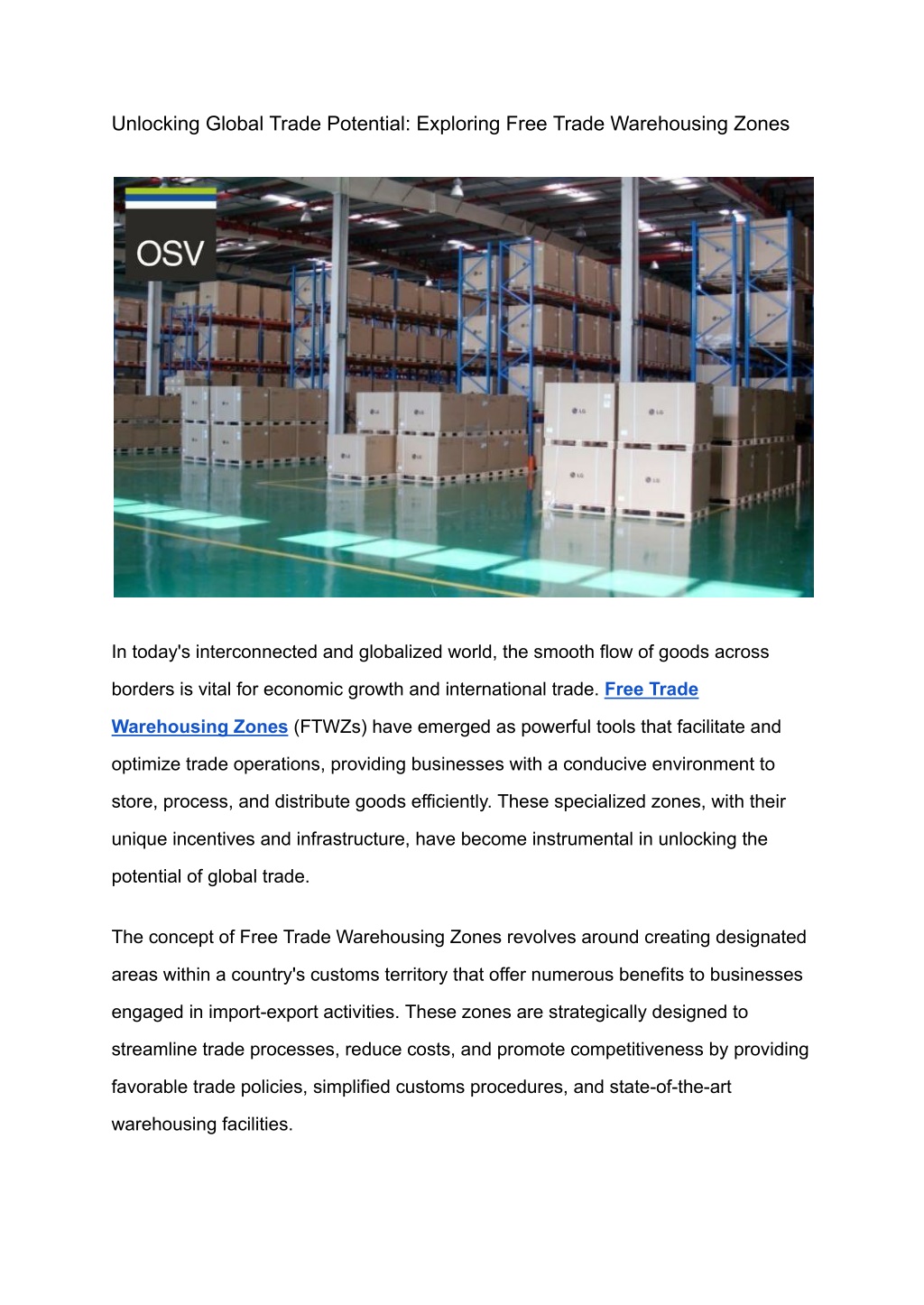
In the future, the role of Free Trade Warehousing Zones is expected to grow as international trade carries on to evolve. Emerging trends indicate that e-commerce will play an more significant role, as companies seek quicker access to global markets. Furthermore, advancements in technology, such as automation and data analytics, will likely enhance warehousing efficiencies and compliance adherence within these zones. As organizations increasingly recognize the strategic importance of Free Trade Warehousing Zones, we can anticipate a increase in investment and creativity aimed at optimizing their operations and expanding their global footprint.